



Choosing materials for your home renovation takes time and thought. Each one is weighed from its colour to its texture, until it sits naturally within the space. Yet in the pursuit of the right look, one question is easily overlooked: is it safe to live with?
That question usually answers itself on handover day, when the “new home smell” fills every room. That smell can feel like the welcome sign of a finished home, though it is not always as welcome as it seems. It is made up of volatile organic compounds, or VOCs, and how much of it lingers depends on what the home is built from.
Knowing how low-VOC materials differ from ordinary ones is the clearest way to answer that question even before work begins.
WHAT CAUSES THE NEW HOME SMELL AFTER RENOVATION?
The new home smell after a renovation is caused by off-gassing, as new materials release VOCs while they cure. Paint and lacquer release most of theirs as they dry, which is why the scent is strongest in the first days and softens within weeks.
The boards inside built-in cabinetry work differently. Ordinary plywood and MDF are bonded with resins that contain formaldehyde, a VOC often measured on its own. Unlike paint, these boards release it slowly, over many months.
The effects of these compounds are subtle, which is what makes them easy to miss. A headache or a sting in the eyes and throat is easily put down to dust or a long day. Yet those small signs can mask a larger concern, as Sengkang General Hospital links long-term exposure to formaldehyde and other VOCs with an increased risk of certain cancers.

This overlooked side of renovation is where DreamR’s story began. Its founders, Race Wong and Rhonda Wong, saw too many homes judged by their surfaces alone, while the materials behind them went unquestioned. For the families in those homes, that meant living with formaldehyde in the air, day after day, often without knowing it.
So DreamR set out to design and build homes that are safe to breathe in from the day they are handed over. Many of its materials are factory-cured, so their drying and settling happen in the factory, long before anything reaches your living room. Once in place, they give off almost no VOCs into the air of your home.
In Singapore’s climate, that counts for more than it might elsewhere.
WHY DO LOW-VOC MATERIALS MATTER FOR INDOOR AIR QUALITY IN SINGAPORE’S HUMID HOMES?
Low-VOC materials matter in Singapore because heat and humidity make new materials give off more of the compounds behind that new home smell. And with humidity averaging around 80% throughout the year, that happens almost every day.
A study of plywood panels shows how much heat and humidity can raise those emissions: formaldehyde levels were up to 1.3 times higher when humidity rose by 20%, and up to 2.5 times higher when the temperature rose by 5°C.

If your home is finished with high-VOC materials, those emissions are most concentrated at night, when the bedroom door is closed and the air-conditioning runs until morning. For hours, you breathe them in as you sleep. And where the same high-VOC materials line the other rooms, your partner, children or parents are breathing them in as well.
That is why, in Singapore, the materials behind a finish deserve as much thought as the finish itself.
PAINTS, ADHESIVES, CARPENTRY AND PANELS: THE LOW-VOC MATERIALS BEHIND A DREAMR PROJECT
Every material in a DreamR project is weighed twice: once for how it looks and wears, and once for what it leaves in the air.
LOW-VOC PAINT AND HAND-TROWELLED LIME PLASTER
Do you picture your walls with the soft texture of plaster, or the clean finish of paint?
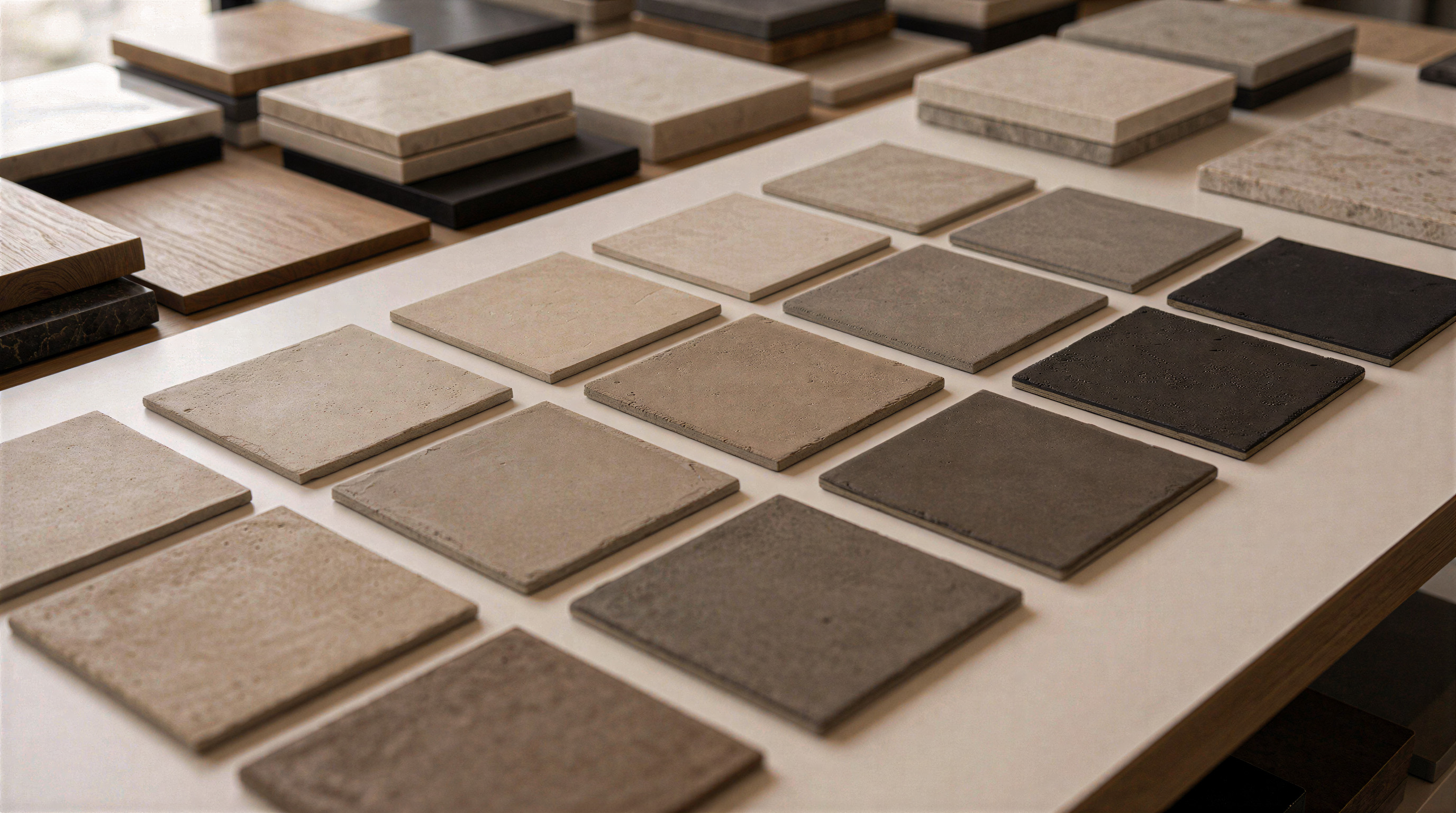
If texture appeals, your walls are trowelled by hand in lime plaster that DreamR sources from its partner workshop in Bali. Made for tropical humidity, it is breathable, letting moisture pass through so walls stay drier and less prone to mould. It is also natural and free of formaldehyde, with a soft, shadowed texture that shifts with the light.

If you prefer paint, DreamR specifies paints certified under the Singapore Green Label, which sets limits on VOC content. Whichever you choose, and in whatever colour suits the room, your walls are as safe to live with as they are beautiful to look at.
ZERO-VOC ADHESIVE: THE LAYER NO ONE SEES
Behind the panels on your walls and the surfaces on your cabinetry is a layer you will never see: the adhesive that holds them in place. DreamR uses one that is zero VOC, so what sits behind each finish meets the same standard as the surface in front of it.
A home the design team recently completed, for example, had panels on almost every wall, which meant adhesive behind nearly every surface. Because the adhesive was zero VOC, there was no smell of formaldehyde at handover, and the owners moved in straight away. After months of waiting, you can move in just as quickly.

ENF-GRADE BOARDS FOR CUSTOM CARPENTRY
Do you have custom pieces in mind for your home, such as a full-height wardrobe or kitchen cabinetry? Whatever you are planning, DreamR builds every custom piece with boards certified to ENF grade, one of the strictest formaldehyde grades for engineered wood.
In one Good Class Bungalow, those same boards went into a barn-inspired retreat for the owners’ children. The design team used them to build sleeping spaces on two levels and a slide from the upper bed, making the retreat safe in its design and in the very materials it is built from.

DREAMR’S OWN ZERO-VOC WALL PANELS
If panelled walls are part of your plans, they may well surround almost every room you live in. That is why DreamR developed its own: zero VOC, acoustic and fire retardant.
At just 8 to 10mm thick, they leave you nearly all of your floor space, where traditional panelling takes 50 to 75mm from every wall it covers. Being acoustic, they also soften the sound in a room, something you will appreciate on a quiet evening at home.

Seen or unseen, each material is chosen for the life that will be lived around it.
HOW TO ENSURE YOUR INTERIOR DESIGNER BUILDS A HOME WITH LOW-VOC MATERIALS
To ensure your home is built with low-VOC materials, ask your interior designer to put every material in writing before the work begins. A firm that takes indoor air seriously will be able to provide the following without hesitation.
1. A MATERIAL SPECIFICATION THAT NAMES EACH PRODUCT
General terms such as “eco-friendly paint” or “low-emission board” are not enough, because they can describe almost anything. Ask for a specification that names the exact paint, board and adhesive to be used, so you know what will go into every room.
In a DreamR project, the team checks that each material installed is the one specified.
2. CERTIFICATES FOR THE PAINTS
Ask which certification each paint carries. In Singapore, look for the Singapore Green Label or the Singapore Green Building Product mark, both of which set limits on VOC content. A recognised certification gives you an independent check, so you are not relying on the wording on the tin alone.
3. THE GRADE OF THE BOARDS USED FOR CUSTOM CARPENTRY
The boards inside your wardrobes and cabinets matter as much as the paint on the walls. Ask for the ENF certificate or test report, which confirms how much formaldehyde the boards release.
4. CONFIRMATION THAT THE ADHESIVE IS ZERO VOC
Adhesive is easily left out of a specification because it is never seen once the work is done. Yet it sits behind panels and laminates throughout the home. Ask for its product data sheet, which should confirm that it is zero VOC.
5. A CLEAR ANSWER ON WHEN YOU CAN MOVE IN
Ask how soon you will be able to move in after handover, and what that answer is based on. With low-VOC materials throughout, you should be able to settle in straight away, without leaving the windows open for weeks to clear the air.
DESIGN YOUR HOME’S INTERIOR IN LOW-VOC MATERIALS WITH DREAMR

Designing with low-VOC materials begins with a conversation, and the DreamR design team would be glad to have it with you over tea. Let us know what you have in mind for your landed home or condominium renovation. From there, we’ll talk you through the materials we would use in your home, each one chosen in the light you’ll live in, so it is safe in fact, not just in feeling.
Begin with a private consultation.
FREQUENTLY ASKED QUESTIONS
WHAT DOES LOW-VOC MEAN?
Low-VOC describes building materials, such as paint and adhesive, made to release only small amounts of volatile organic compounds, the carbon-based chemicals that evaporate into the air at room temperature. Choosing low-VOC materials keeps indoor air cleaner and fresher, so a newly renovated home feels comfortable to live in much sooner.
HOW CAN RENOVATION CHOICES REDUCE ODOUR?
Renovation odour can be reduced by specifying low-VOC finishes and low-emission boards before work begins, so there is less to air out afterwards. Choosing materials that are cured before installation also helps, as much of their drying is already done by the time they arrive. Together, these choices keep indoor air fresher from the day you move in.
DO LOW-VOC MATERIALS HELP PREVENT MOULD IN SINGAPORE HOMES?
Low-VOC materials improve the air, while preventing mould depends on controlling moisture, so the two work together. Breathable finishes such as lime plaster let walls release moisture instead of trapping it, which helps keep mould from settling. Good airflow matters, as mould thrives in corners and poorly ventilated spaces when indoor humidity stays above 60%.