Office Renovation

How to Design an Office That Inspires Creativity

BY
DreamR Design Team
|
August 18, 2025
|
 min. read

What do Steve Jobs, Leonardo da Vinci, and the creators of Pixar's most beloved films have in common? They understood that creativity isn't born in isolation—it emerges from the intersection of diverse ideas, unexpected encounters, and environments that encourage cross-pollination of thought.

Research from cognitive scientists reveals that the most innovative minds aren't specialists confined to single disciplines, but rather "T-shaped" individuals who combine deep expertise in one area with broad knowledge across multiple fields. This phenomenon, known as "combinatorial creativity," explains why breakthrough innovations often come from connecting seemingly unrelated concepts.

Take Pixar's legendary creative process. The animation studio's remarkable success stems from their "Braintrust" model—a system where directors, writers, and animators from different projects regularly critique each other's work. This cross-project collaboration has produced films that consistently revolutionize storytelling, from Toy Story to Inside Out. The magic happens not in individual genius moments, but in the friction and fusion of diverse perspectives.

But here's the fascinating part: this type of creative thinking doesn't just depend on having the right people—it requires the right environment. Studies from MIT's Building 20 (dubbed "the magical incubator") showed that some of the most groundbreaking innovations occurred not in formal meeting rooms, but in hallways, stairwells, and informal gathering spaces where researchers from different disciplines bumped into each other.

The science is clear: creativity thrives when diverse minds collide in spaces designed to encourage serendipitous encounters. This isn't just academic theory—it's a blueprint for designing offices that can transform your team's creative output.

Why Office Design Matters More Than Ever
In today's fast-moving business world, where innovation and problem-solving are daily requirements, your office space should do more than house desks and chairs. It should be an active catalyst for the kind of cross-disciplinary thinking that drives breakthrough solutions.

An uninspiring workplace can quietly stifle the very interactions that fuel creativity. On the other hand, a thoughtfully designed office becomes what researchers call a "collision space"—an environment that naturally brings together people with different expertise and perspectives.

Whether you're building a space for creatives, developers, or client-facing professionals, the right office interior design can orchestrate the spontaneous encounters and collaborative moments that lead to innovation. That's why many businesses are choosing to work with an experienced office interior designer in Singapore to bring both scientific understanding and aesthetic vision to every corner of their space.

1. Create Flexible Zones for Cross-Pollination

Creative thinking doesn't always happen at a desk—and according to research, it rarely happens in the same place twice. The most innovative ideas emerge when people from different departments, with different expertise, accidentally discover common ground.

Here's how to introduce flexibility during your office space renovation that encourages these crucial collisions:

Modular furniture that can be reconfigured for different group sizes and meeting types, allowing teams to adapt spaces for their specific creative needs.

Breakout areas with whiteboards or soft seating positioned strategically between departments, creating natural stopping points where different teams intersect.

Small enclosed booths for video calls or deep work that don't isolate people completely but provide focused spaces within the larger ecosystem.

The key is designing for autonomy and movement—research shows that when people have choices about where and how they work, they're more likely to engage in the spontaneous conversations that spark innovation.

2. Let Natural Light Lead Cognitive Performance

Light has a direct impact on mood, alertness, and cognitive function—but recent neuroscience research reveals it's even more crucial for creative thinking. Studies show that exposure to natural light increases production of serotonin, which enhances both mood and the brain's ability to make novel connections between ideas.

Whenever possible, maximise natural light through open layouts and glass partitions. For deeper spaces that get less sun, a skilled office renovation expert will know how to use indirect lighting, adjustable LEDs, and reflective materials to simulate the cognitive benefits of natural brightness.

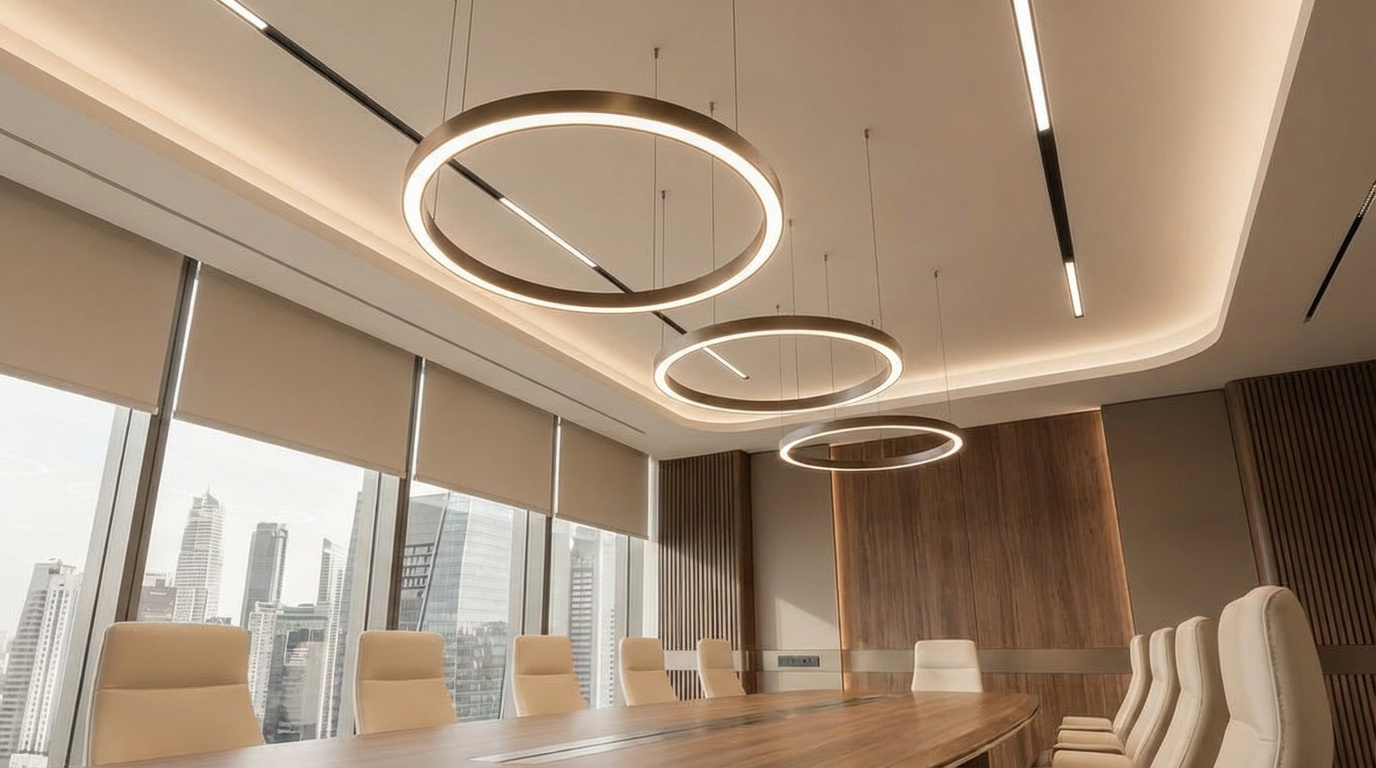
Consider circadian lighting systems that adjust color temperature throughout the day, supporting your team's natural energy cycles and maintaining peak creative performance from morning brainstorms to afternoon problem-solving sessions.

3. Use Color Psychology to Stimulate Innovation

The psychology of color plays a bigger role in creativity than most people realize. Neuroscientists have found that certain colors can actually enhance different types of thinking—and the strategic use of color can create environments that promote the cross-disciplinary collaboration that drives innovation.

Soft greens and blues promote calm focus and are ideal for spaces where people need to concentrate deeply or engage in thoughtful dialogue between different expertise areas.

Warm yellows or coral tones stimulate divergent thinking and are perfect for brainstorming rooms where you want people from different departments to think expansively together.

Bold accent walls in collaborative zones can signal to the brain that this is a space for bold, unconventional thinking—encouraging people to share ideas they might normally keep to themselves.

We often guide clients during their office renovation in Singapore to balance brand colors with colors that promote the right cognitive state for cross-functional collaboration.

4. Bring the Outdoors In for Cognitive Restoration

Biophilic design isn't just a trend—it's based on solid research showing that natural elements can boost creativity and reduce the mental fatigue that blocks innovative thinking. Studies from the University of Melbourne found that even brief glimpses of nature can restore attention and improve creative problem-solving by up to 20%.

Try adding:

  • Indoor plants or vertical green walls that provide visual breaks and improve air quality
  • Natural wood finishes that create warmth and reduce stress hormones
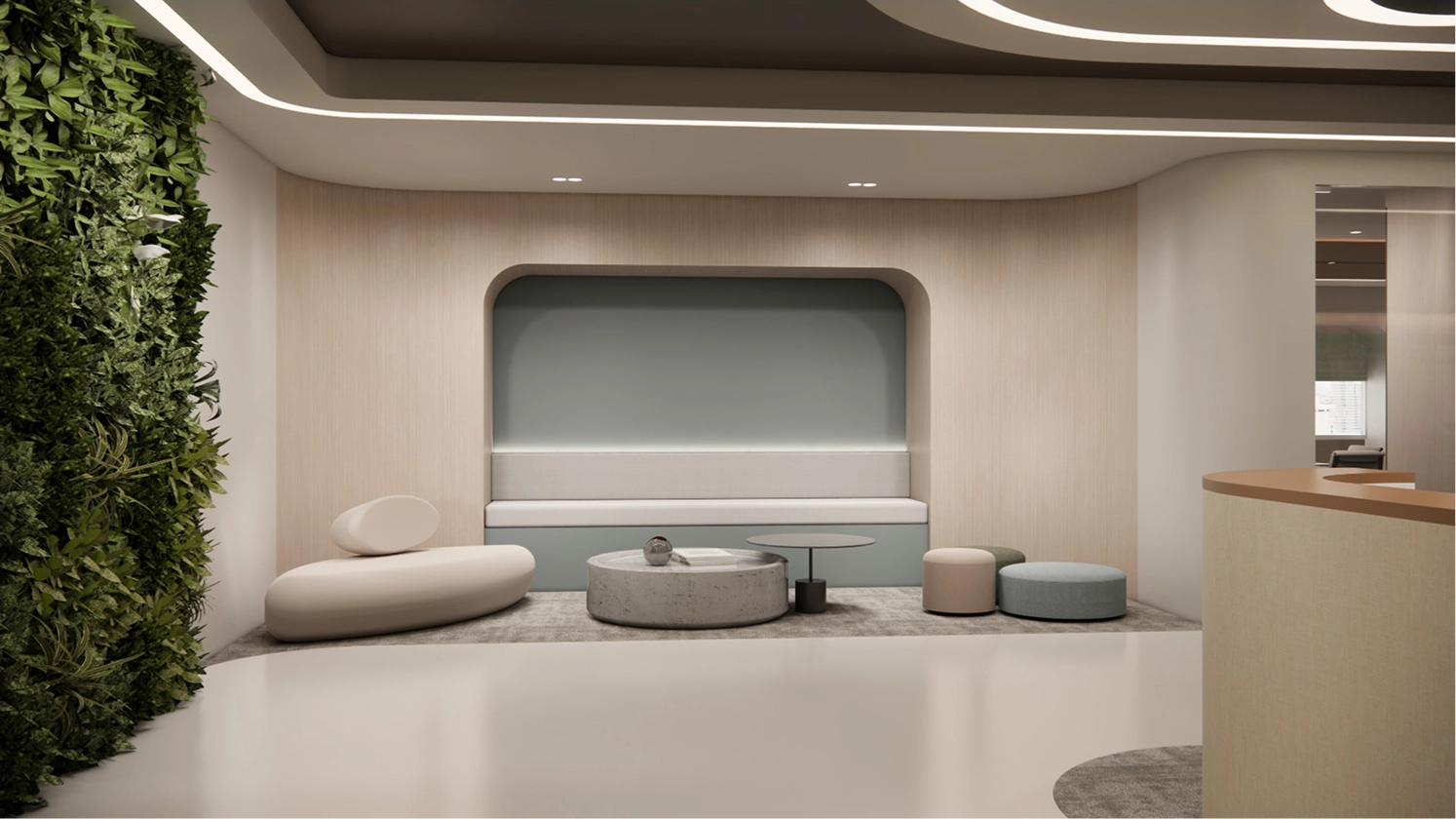
  • Curved furniture and organic shapes that soften the environment and encourage more relaxed, open thinking

A skilled office interior decorator can integrate these elements to create spaces that naturally restore your team's creative energy throughout the day.

5. Prioritise Acoustics for Deep Work and Collaboration

Creative work requires both focused concentration and dynamic collaboration—but in open-plan offices, poor acoustics can destroy both. Research from Harvard Business School shows that while open offices increase interactions, they often reduce the quality of those interactions due to noise and distraction.

The solution lies in acoustic zoning that supports different types of creative work:

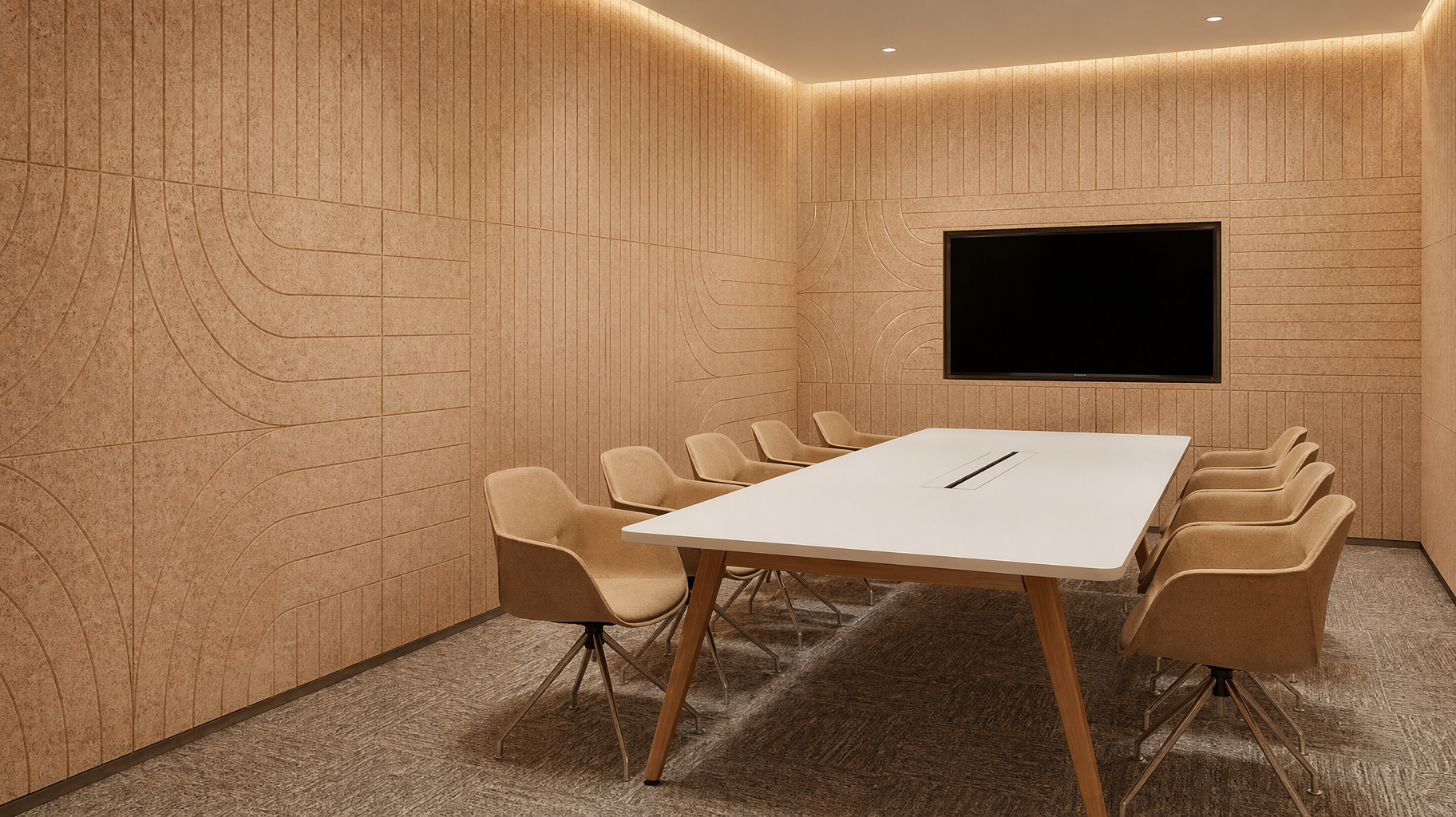
Acoustic panels and sound-absorbing materials in quiet zones where people need to think deeply or work on complex problems.

Collaborative spaces with controlled acoustics that allow for animated discussions without disturbing focused work nearby.

White noise or nature sounds in transition areas that mask distracting conversations while maintaining the energy of a collaborative environment.

A well-designed acoustic environment allows your team to shift seamlessly between the focused thinking and collaborative exchange that both fuel innovation.

6. Design for Movement and Serendipitous Encounters

Movement doesn't just fuel physical energy—it's essential for creative thinking. Studies show that walking increases creative output by up to 60%, but more importantly, designing for movement creates the informal encounters that lead to breakthrough collaborations.

Strategic design elements include:

  • Open pantry zones with bar-height seating that naturally bring together people from different departments
  • Internal staircases and walkways that create opportunities for cross-departmental interactions
  • A thoughtful mix of seating types that encourages people to move between different environments throughout the day

During your office renovation, designing for movement isn't just about health—it's about creating the collision spaces where innovation happens.

7. Reflect Your Company's Identity While Encouraging Exploration

A creative office should feel uniquely yours while also encouraging people to think beyond their usual boundaries. Visual cues—like artwork from different cultures, quotes from various disciplines, or project boards showing cross-departmental collaborations—can inspire both pride and curiosity.

Our team works closely with clients to translate company values into design elements that encourage both identity and exploration. Whether it's creating gallery walls that showcase diverse influences or designing flexible spaces that can host everything from technical workshops to creative critiques, we ensure your workplace reflects both who you are and who you're becoming.

Make Creativity Part of the Blueprint

The most innovative companies understand that creativity isn't a luxury—it's a competitive advantage. And that advantage doesn't come from isolated genius, but from creating environments where diverse minds naturally collide, collaborate, and create together.

Whether you're renovating a startup workspace or upgrading a corporate HQ, every decision—from layout to lighting—should support the kind of cross-pollination that drives breakthrough thinking. The goal isn't just a beautiful office, but a space that actively catalyzes the creative process.

As an established office renovation company Singapore teams trust, we help businesses create workplaces that spark the collaborative energy and cross-disciplinary thinking that drives innovation—without sacrificing function or professionalism.

Contact us today for a free consultation to discuss how we can design your space for maximum creative impact!

Explore our extensive portfolio of Singapore office interiors to see how we've helped other companies transform their creative potential through thoughtful design.

Ready to renovate?

Let’s get you started with your free and commitment-free consultation.

Let’s talk
Tags
Commercial
Office
Share
Link copied!
Related articles

How to Incorporate Smart Technology into Your Office Renovation

December 12, 2025
|
min. read

The modern office renovation isn't just about beautiful interiors—it's about creating spaces that actively boost productivity through intelligent technology integration. While aesthetics matter, today's competitive business environment demands workspaces that enable teams to collaborate more effectively, present more compellingly, and work more efficiently.

The smartest office technology investments are the ones employees notice and appreciate immediately: tools that eliminate daily frustrations, enhance presentations, and make collaboration feel effortless. When planning your office renovation, these are the technologies that deliver instant impact and measurable returns.

Interactive Displays That Transform Meetings

Gone are the days of fighting with projectors and tangled cables. Large-format interactive displays have revolutionized how teams collaborate and present. These aren't just big screens—they're digital canvases where ideas come to life.

Touch-enabled displays allow multiple team members to annotate, sketch, and modify presentations in real-time. Imagine brainstorming sessions where everyone can literally draw their ideas on the same screen, or client presentations where you can mark up architectural plans instantly based on feedback.

Wireless screen sharing eliminates the cable chaos that used to plague meeting rooms. Team members can share their laptops, tablets, or phones to the display instantly, making transitions between presenters seamless and professional.

Multi-touch capabilities enable true collaboration—several people can work on the same digital whiteboard simultaneously, perfect for design reviews, strategy sessions, and creative problem-solving.

Smart Whiteboards That Never Run Out of Space

Digital whiteboards have evolved far beyond simple drawing surfaces. Modern smart boards offer infinite canvas space, automatic handwriting recognition, and seamless integration with popular business applications.

These systems can recognize and convert handwritten notes into digital text, making brainstorming sessions immediately searchable and shareable. Drawings and diagrams can be instantly exported to project management tools or shared via email.

Template libraries provide structured frameworks for different meeting types—project planning, SWOT analysis, design thinking sessions—eliminating setup time and ensuring productive discussions.

Cloud integration means whiteboard sessions automatically save to shared drives, so brilliant ideas from Friday afternoon brainstorming are still accessible Monday morning.

Video Conferencing That Actually Works

Poor video conferencing technology undermines remote collaboration and frustrates both in-office and remote team members. Professional-grade solutions eliminate these pain points while creating impressive client experiences.

Auto-framing cameras intelligently track speakers and adjust the view to include all participants, eliminating the need for manual camera operation. This is particularly valuable for Singapore businesses working with international clients and partners.

Noise cancellation and acoustic optimization ensure clear communication even in open office environments. Advanced microphone arrays can isolate voices while suppressing background noise, making remote participants feel truly included.

One-touch meeting start eliminates the technical delays that often plague video calls. Calendar integration automatically loads correct meeting details and connects participants instantly.

Digital Signage for Dynamic Communication

Smart displays throughout the office can transform how information is shared and how visitors experience your space. These systems go far beyond basic announcements to create engaging, informative environments.

Welcome displays in reception areas can automatically show personalized greetings for scheduled visitors, display company achievements, or showcase current projects. This creates professional first impressions while reducing reception desk workload.

Wayfinding displays help visitors and new employees navigate complex office layouts, while directory systems can show real-time room availability and booking information.

Internal communication boards can display company news, project updates, celebration announcements, and important reminders, ensuring everyone stays informed without email overload.

Wireless Presentation Systems

Traditional presentation setups create friction that undermines productivity and professionalism. Wireless systems eliminate cables while adding powerful capabilities that enhance how ideas are shared.

Multiple device connectivity allows seamless switching between presenters using different devices and operating systems. Mac, PC, tablet, or phone—everything connects effortlessly.

Screen splitting enables comparison presentations, showing before-and-after designs side by side, or displaying multiple data sources simultaneously for comprehensive analysis.

Annotation tools allow presenters to mark up any content in real-time, whether it's highlighting important data points, circling key design elements, or adding notes to architectural drawings.

Smart Booking and Room Management

Office space optimization becomes crucial as real estate costs rise. Smart booking systems maximize utilization while eliminating the frustration of phantom bookings and unavailable rooms.

Touch-screen panels outside meeting rooms display real-time availability and allow instant booking for impromptu meetings. QR code integration enables smartphone booking without downloading additional apps.

Automatic room release systems detect when booked rooms are empty and make them available for others, maximizing space utilization in expensive Singapore office markets.

Analytics dashboards show which spaces are most popular, helping inform future renovation decisions and space allocation strategies.

Integrated Audio Solutions

Professional audio systems eliminate the "can you hear me now?" moments that plague many meetings while creating environments conducive to different work activities.

Ceiling-mounted microphone systems capture clear audio from anywhere in the room without requiring participants to pass around handheld microphones or crowd around conference phones.

Zone-based audio control allows different areas to have appropriate sound levels—quiet background music in collaboration areas, clear audio for presentation spaces, silence for focused work zones.

Smartphone integration enables employees to stream background music or take calls through room audio systems, creating more comfortable and productive work environments.

Mobile Device Integration

BYOD (Bring Your Own Device) environments require infrastructure that works seamlessly with personal and company devices while maintaining security and functionality.

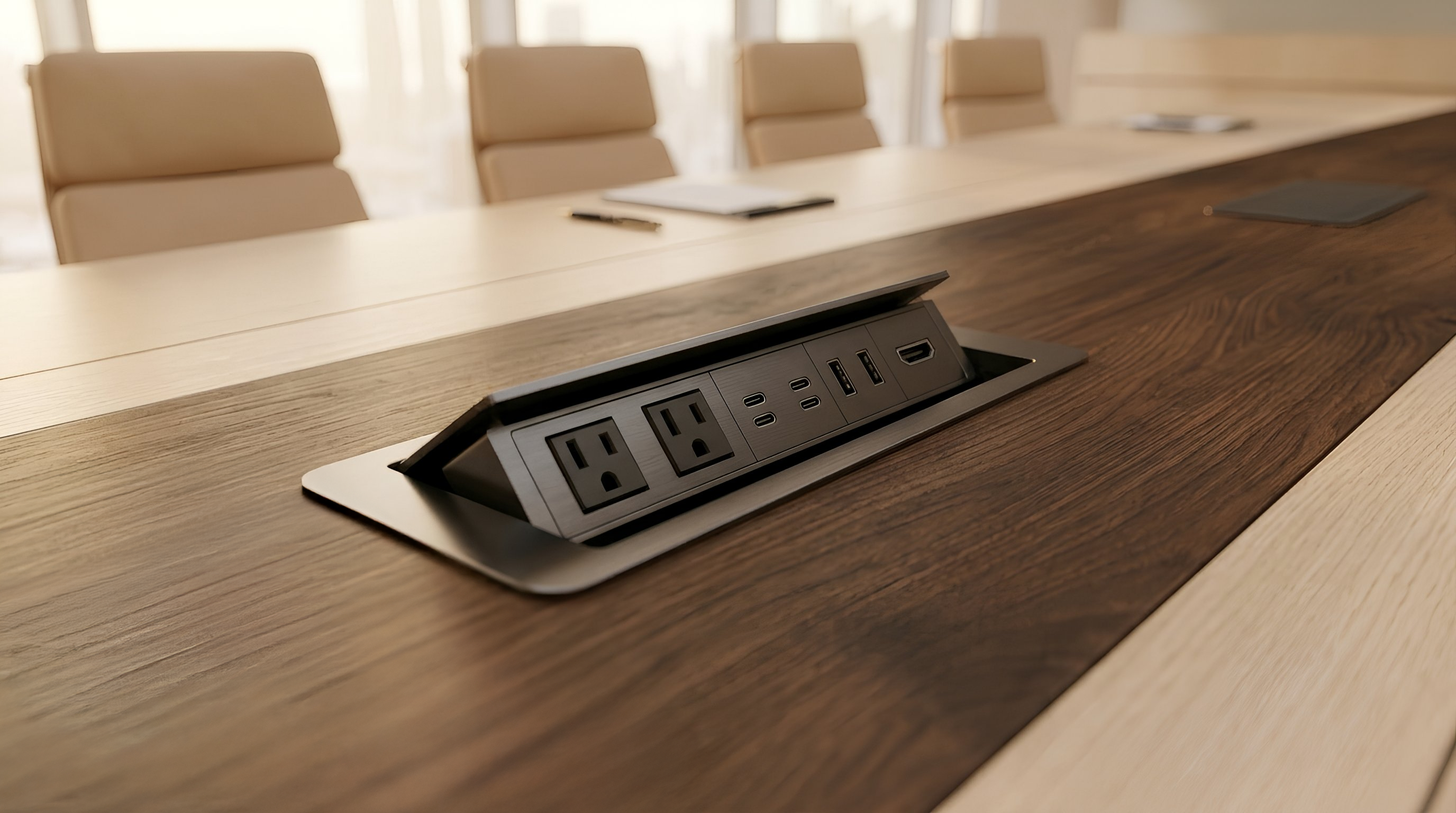
Wireless charging stations integrated into desks and meeting tables eliminate cable clutter while ensuring devices stay powered throughout the workday.

Universal connectivity hubs support multiple device types and charging standards, accommodating the diverse technology preferences of modern teams.

Secure guest networks provide client and visitor internet access without compromising company security, essential for Singapore businesses hosting international partners.

Smart Lighting with Purpose

While full climate systems might be overkill, smart lighting provides immediate, noticeable benefits that employees appreciate and clients notice.

Task-specific lighting presets optimize illumination for different activities—bright light for detailed work, softer lighting for creative sessions, presentation lighting for client meetings.

Motion-activated systems in less frequently used areas like storage rooms and copy centers provide convenience while reducing energy costs.

Circadian lighting in key areas can boost alertness during important work periods and create more comfortable environments for extended meetings.

Implementation Strategy for Maximum Impact

The key to successful smart technology integration during renovation is prioritizing solutions that solve real problems your team faces daily. Start with the technologies that will be used most frequently and provide the most obvious benefits.

Plan technology integration during the design phase to ensure adequate power, networking, and mounting solutions. Hiding cables and ensuring clean installations requires coordination between technology and renovation teams.

Consider user training and change management to ensure new technologies enhance rather than complicate daily workflows. The best systems feel intuitive, but brief training sessions can unlock advanced features that provide additional value.

Return on Smart Technology Investment

Smart office technology typically pays for itself through improved productivity, enhanced client impressions, and reduced operational friction. Eliminating daily technology frustrations allows teams to focus on valuable work rather than troubleshooting equipment.

Professional presentation capabilities can directly impact client relationships and business development, particularly important for Singapore companies competing in international markets.

Space optimization through smart booking and management systems maximizes expensive real estate investments while improving employee satisfaction with available resources.

Future-Ready Technology Choices

Choose systems that can grow and evolve with your business needs. Cloud-based solutions provide access to continuous updates and new features without major infrastructure changes.

Open standards and platform-agnostic solutions enable integration of best-of-breed tools while preventing vendor lock-in situations that could limit future flexibility.

The goal is creating an office environment where technology enhances human capability and collaboration rather than creating additional complexity or distraction.

The Ultimate Guide to Office Renovation for Large Teams

December 23, 2025
|
min. read

In the bustling, dynamic corporate landscape of Singapore, when it comes to undertaking an office renovation, particularly for a substantial team, the endeavour transcends the simple addition of extra desks. It morphs into a sophisticated strategic undertaking. The core objective is to meticulously craft an environment that not only seamlessly accommodates a larger headcount but, more importantly, actively fosters collaboration, intelligently supports diverse work styles, and optimises every square foot of precious space. Crucially, a forward-thinking renovation also strategically prepares your business for sustained future growth and evolving operational needs.

Whether your organisation is experiencing a period of rapid expansion, transitioning into a new, larger premises, or simply seeking to comprehensively update an outdated office to meet contemporary demands, this definitive guide will walk you through the multifaceted considerations essential for planning and executing a truly successful office renovation for large teams in Singapore.

1. Unearthing Core Needs: Deeply Understanding Your Team’s Unique Work Ecosystem

Every impactful commercial office renovation must logically commence with an exhaustive, clear understanding of how your team fundamentally operates. For large teams, this involves navigating a complex matrix of departmental interdependencies, individual work preferences, and established collaboration patterns. A superficial assessment simply won't suffice.

Key Diagnostic Questions to Guide Your Planning:

  • Inter-team Synergy: Which specific teams or departments have critical, frequent interdependencies and therefore need to be physically situated in close proximity for optimal collaboration and communication flow?
  • Diverse Work Styles: Does your staff require dedicated quiet focus zones for deep work, vibrant collaborative spaces for brainstorming and agile projects, a mix of both, or even highly specialised areas like soundproof booths for calls or ergonomic labs for specific tasks?
  • Flexible Work Models: Are you transitioning to or fully embracing hybrid work arrangements, requiring fewer fixed desks? Is hot-desking, hot-labbing, or activity-based working (ABW) a core strategy? This significantly impacts the ratio of individual workstations to shared spaces.
  • Employee Demographics & Preferences: Do you have a multi-generational workforce? What are their preferences for amenities, lighting, or desk setups? Surveys and focus groups can yield invaluable insights.

A professional office renovation expert or a seasoned office interior designer in Singapore will leverage this in-depth understanding. They can then meticulously map out diverse work zones—from private, soundproofed rooms and dedicated focus pods to expansive shared lounges, adaptable breakout areas, and flexible meeting spaces—that precisely cater to these varied needs, ensuring every square foot is purposefully utilised.

2. The Art of Optimisation: Maximising Space Efficiency with Intelligent Design

Space planning is arguably the most critical element when undertaking a renovation office project for a large team in Singapore's high-density urban environment. The intricate challenge lies in achieving a delicate equilibrium between fostering openness and providing necessary privacy, all without creating an office that feels cramped, overwhelming, or inefficient. The goal is to make every square meter work harder and smarter.

Intelligent Space Efficiency Strategies:

  • Modular Furniture Systems: Embrace highly adaptable, modular furniture systems. These allow for effortless reconfiguration of workstations, meeting areas, and communal zones as team sizes fluctuate or project needs evolve. Think desks that can be easily linked, reoriented, or even tucked away.
  • Integrated Built-in Storage: Clutter is the enemy of efficiency and aesthetics, especially in large offices. Incorporate bespoke built-in cabinetry, shelving, and storage units that are seamlessly integrated into walls, under windows, or as part of architectural features. This maximises vertical space and effectively reduces visual noise.
  • Multi-Use Areas: Design spaces with inherent flexibility. A well-equipped pantry, for instance, can double as an informal meeting zone with high-top tables and comfortable seating. A lounge area can serve for casual catch-ups by day and company-wide presentations by night.
  • Smart Demarcation: Use subtle design cues like flooring changes, area rugs, custom lighting schemes, or low, open shelving units to visually define zones within open-plan spaces, providing structure without rigid barriers.

A truly effective office interior renovation transcends merely adding more furniture; it fundamentally reimagines how the space functions as a dynamic ecosystem for the entire team, promoting flow and collaboration.

Open-concept office design for large teams in Singapore

3. Future-Proofing Your Investment: Investing in a Scalable Layout

A key hallmark of successful office design Singapore for large teams is its inherent scalability. Designing with future expansion, departmental shifts, and technological advancements in mind is paramount, proactively preventing costly and disruptive reworks down the line. Your office should be an asset that grows with your business.

Elements of a Scalable Office Layout:

  • Open Desk Areas with Movable Partitions: While fixed cubicles are largely outdated, open desk areas paired with lightweight, movable, and often acoustically treated partitions offer flexibility. These allow teams to easily expand or contract their footprint without major construction.
  • Redundant Cabling and Power Points: Over-specifying your cabling infrastructure and distributing ample power points (including floor boxes and discreet wall outlets) far beyond immediate needs ensures future expansion of workstations or technology setups is seamless and cost-effective.
  • Flexible Meeting Room Infrastructure: Invest in room booking systems that can adapt to changing meeting room sizes or types. Ensure wall-mounted display and camera points are strategically placed to support various furniture configurations.
  • Cloud-Based Solutions: Prioritise cloud-based collaboration tools and network infrastructure that can easily scale up without requiring extensive physical hardware changes.

Experienced office renovation companies in Singapore possess the foresight and technical know-how to future-proof your office layout, ensuring it remains agile and adaptable for evolving team sizes, technological advancements, and shifts in work models.

4. Nurturing Connectivity: Thoughtful Collaboration Zones

Teamwork and inter-departmental synergy are central to the success of large organisations. Therefore, your office space renovation must include a diverse array of collaboration spaces, catering to different group sizes, privacy needs, and interaction styles.

Variety in Collaboration Spaces:

  • Huddle Rooms: Small, enclosed, and acoustically treated huddle rooms (for 2-4 people) are perfect for impromptu discussions, quick video calls, or focused small-group work without disrupting the wider office.
  • Large Meeting Rooms with Advanced AV: Essential for formal presentations, client pitches, and company-wide meetings. These must be equipped with state-of-the-art video conferencing setups, large displays, and robust audio systems.
  • Brainstorming Hubs: Dedicated areas with writable walls (whiteboards, glass boards), movable furniture, and interactive screens to facilitate dynamic, creative problem-solving sessions.
  • Lounge Areas: Comfortable, informal lounge areas with soft seating, coffee tables, and a relaxed atmosphere encourage casual catch-ups, spontaneous idea sharing, and provide a vital break from structured work.
  • Hybrid Meeting Pods: Specifically designed spaces with optimal camera angles, lighting, and sound for seamless mixed-presence meetings.

Having a diverse mix of both formal and informal collaboration spaces empowers your large team to connect effectively, fostering a dynamic work culture without disrupting the productivity of others engaged in focused work.

5. Elevating the Human Experience: Designing for Comfort and Productivity

When a substantial number of people are working collaboratively within a shared environment for extended periods, individual comfort and sustained productivity become incredibly vital. Overlooking these aspects can lead to increased fatigue, reduced morale, and a drop in overall output.

Prioritising Employee Well-being:

  • Ergonomic Furniture: This is a non-negotiable investment. Provide high-quality ergonomic office chairs that offer adjustable lumbar support, seat depth, and armrests to prevent discomfort and injury during long hours. Consider sit-stand desks for improved posture and energy levels.
  • Smart Lighting Systems: Implement intelligent, layered lighting systems that minimise glare, reduce eye strain, and support natural circadian rhythms. This includes dimmable controls, adjustable colour temperatures, and task lighting at individual workstations. Natural light maximisation (as previously discussed) is also key.
  • Climate Control Zones: Large offices can often have inconsistent temperatures. Implement zoned climate control systems where possible, allowing different areas to be adjusted to comfortable temperatures, ensuring consistent comfort across the entire floorplate.
  • Indoor Air Quality (IAQ): Integrate advanced air filtration systems and consider biophilic design elements (plants) to improve IAQ, reducing airborne pollutants and enhancing overall health.

These vital elements are not mere amenities; they are fundamental drivers of productivity and employee satisfaction, and an experienced office interior design company in Singapore will integrate them into the renovation plan from the very initial stages.

6. The Sound Solution: Mastering Acoustics and Noise Control

One of the biggest challenges in large, open-plan offices is managing noise. Excessive noise levels can severely impair concentration, increase stress, and negatively impact morale. Effective acoustic planning is paramount.

Strategies for Superior Noise Management:

  • Acoustic Panelling: Install strategically placed acoustic panels on walls and ceilings in open areas, corridors, and even within meeting rooms. These panels are designed to absorb sound waves, significantly reducing echo and reverberation.
  • Carpeting and Soft Furnishings: Use commercial-grade carpeting or strategically placed area rugs in high-traffic zones and collaboration areas to absorb sound. Incorporate upholstered furniture, fabric curtains, and soft partitions.
  • Sound Masking Systems: Consider implementing sound-masking technology, which emits a low-level, unobtrusive ambient sound to mask human speech and other distracting noises, creating a more private and comfortable acoustic environment.
  • Designated Quiet Zones: Create clearly defined "quiet zones" or "no-talk zones" where employees can retreat for focused work without interruption.
  • High-Performance Glazing: If near noisy external environments, invest in double-glazed or laminated glass for windows to minimise external noise penetration.

An office interior decorator or a specialised office interior designer Singapore with extensive experience in large team layouts will possess the expertise to manage sound effectively without compromising on the overall office design and aesthetic.

7. Elevating Shared Spaces: Modernising the Pantry and Restrooms

In offices accommodating 50 or more employees, shared communal spaces like pantries, break rooms, and restrooms experience exceptionally high traffic. Their design directly impacts employee satisfaction and morale. These areas need to be thoughtfully designed for efficiency, comfort, and hygiene.

Designing for High-Traffic Shared Areas:

  • Larger Counters and Multiple Appliances: Provide ample counter space, multiple microwaves, efficient coffee machines (or multiple stations), and sufficient refrigeration to avoid queues and bottlenecks during peak hours.
  • Dedicated Dining Areas: Separate dining zones from food preparation areas to create a more relaxed and comfortable experience.
  • Wellness Corners: Integrate wellness elements such as comfortable seating, a small library of books, or even dedicated quiet rooms for prayer or meditation.
  • Restroom Efficiency and Hygiene: Design restrooms with durable, easy-to-clean materials, ample stalls, efficient ventilation, and touchless fixtures to ensure high standards of hygiene and reduce waiting times.
  • Waste Management: Integrate attractive and efficient waste and recycling stations that are easy to use and maintain.

This attention to detail in shared spaces is especially relevant in office interior design in Singapore, where maximising functionality and comfort within often-limited spaces is a key aspect of successful commercial design.

8. Streamlining Operations: Improving Workflow with Smart Technology

In a large, bustling office, friction points in daily operations can severely hinder efficiency. Leveraging smart technology can significantly simplify day-to-day routines, reduce administrative burdens, and help large teams stay organised and productive.

Key Technology Integrations for Enhanced Workflow:

  • Smart Access Systems: Implement secure and efficient access control systems (e.g., card readers, facial recognition) for entry, meeting rooms, or specific zones, integrating with existing HR systems.
  • Meeting Room Schedulers: Deploy intuitive digital meeting room scheduling panels outside each conference room, clearly displaying availability and allowing on-the-spot bookings.
  • Desk Booking Platforms: For hybrid or hot-desking models, implement user-friendly desk booking applications that allow employees to reserve workstations or collaboration spaces in advance.
  • Integrated AV Control: Centralised control systems for all audio, video, lighting, and blinds in meeting rooms.
  • Wayfinding Digital Signage: In very large offices, digital signage can help employees and visitors navigate different departments or zones efficiently.

Your office renovation expert can recommend and integrate cutting-edge solutions that not only blend seamlessly into the physical space but also dramatically improve how the office functions, making it a truly smart and efficient workspace.

9. The Cornerstone of Success: Choosing a Reliable Office Renovation Company

Managing an office renovation in Singapore for a large team is an undertaking of considerable complexity, involving significant investment and coordination. Partnering with the right office renovation company is not merely a choice; it is the ultimate determinant of a smooth, efficient process and a successful outcome tailored precisely to your specific business needs and aspirations.

What to Look For in Your Renovation Partner:

  • Extensive Experience in Commercial Office Renovation: Prioritise firms with a proven track record of successfully completing large-scale commercial office renovation projects in Singapore.
  • Strong Portfolio: Review their portfolio for examples of Singapore office interiors that demonstrate their versatility, design prowess, and ability to handle complex requirements.
  • Integrated Services: Look for an office interior design company Singapore that offers comprehensive, end-to-end services – from initial consultation and conceptualisation to space planning, material sourcing, project management, and final handover.
  • Technical Expertise: Ensure they possess expertise in acoustics, lighting design, AV integration, and ergonomic planning for large teams.
  • Client Testimonials and References: Request references from previous large-scale office clients to verify their reliability, communication, and project delivery capabilities.

A reputable firm will adeptly handle all the complexities—from navigating local planning approvals and regulatory compliance to meticulous design execution, budget management, and ensuring minimal disruption to your ongoing operations.

Ready to Renovate for Growth and Productivity?

Renovating an office for a large team is far more than just scaling up; it’s about designing smarter, more strategically, and with a profound understanding of human behaviour in the workplace. By meticulously planning your layout, investing in the right furniture and technology, and prioritising employee well-being, you can create a truly transformative workspace that not only supports your team’s daily work with unparalleled efficiency but also strategically positions your business for future success and sustained growth in Singapore's competitive landscape.

Our expert team, renowned as an office renovation expert and a leading commercial office renovation company, offers unparalleled office interior design services in Singapore. As a premier office interior design company Singapore, we are the office interior designers in Singapore and office interior decorators who understand the nuances of crafting sophisticated, high-performance Singapore office interiors. From meticulous office renovation Singapore projects to comprehensive office interior renovation, we are your trusted office renovation company Singapore partner.

Contact us today for a free consultation to discuss your dream space!

Explore our extensive portfolio of office projects to inspire your next renovation.

How to Divide Large Offices into Functional Zones without Losing the Open Feel

December 2, 2025
|
min. read

Having a spacious office in Singapore is a rare advantage—but if it’s not planned properly, a large open space can quickly become overwhelming, noisy, and underutilised. The challenge? Creating defined zones for focused work, meetings, and collaboration without making the space feel closed-off or cluttered.

With the right office renovation approach, you can strike the perfect balance between openness and function. Whether you're starting a commercial office renovation or simply updating your layout, these smart design strategies can help you get the most out of your space while keeping that airy, modern feel.

Why Zoning Matters in a Large Office

Large offices can feel disorganised without a clear structure. Without visual or spatial cues, employees may struggle to find focus areas, collaboration spots, or quiet corners.

An experienced office renovation expert knows that zoning is not about building more walls—it’s about using design to guide how people interact with the space. Smart zoning leads to:

  • Better space utilisation
  • Improved workflow and communication
  • More privacy without isolation
  • A cohesive and inviting atmosphere

Let’s explore how to achieve this with thoughtful design.

Large open-plan office in Singapore with glass partitions and collaborative zones

1. Use Visual Cues Instead of Walls

Walls can break up space, but they also block light and flow. To maintain an open layout, use subtle visual cues like:

  • Area rugs to define breakout or lounge zones
  • Changes in flooring or ceiling height to differentiate departments
  • Accent colours or material shifts (e.g., wood slats, felt panels) to signal different zones

These non-intrusive dividers help employees intuitively understand the purpose of each area without physically closing off the space.

2. Introduce Transparent or Semi-Transparent Partitions

Glass partitions are a popular feature in many Singapore office renovations because they preserve openness while creating usable, quiet spaces. Frosted panels can offer privacy for meeting rooms or management offices while still allowing light to pass through.

Other smart options include:

  • Sliding glass doors for flexible separation
  • Bookshelf-style dividers that double as storage
  • Plant walls or acoustic panels for a softer, organic divide

If you're working with a professional office interior design company, they’ll help you balance privacy and transparency for each zone.

3. Plan for Multi-Use Zones

Not every zone needs a single, fixed purpose. With the right furniture and layout, you can create flexible spaces that adapt to changing needs:

  • A casual lounge can double as a brainstorming space
  • High-top tables can be used for lunch, meetings, or laptop work
  • Modular furniture allows you to reconfigure spaces as your team grows

Office interior renovation isn’t just about aesthetics—it’s about designing with adaptability in mind.

Office renovation with multi-use zones and modern office furniture

4. Create Quiet Zones and Focus Pods

Even in large offices, quiet zones are essential for deep work. Carve out corners or use acoustic booths for solo focus work, phone calls, or one-on-one meetings.

Work with an office renovation company that understands acoustics—because visual openness shouldn't come at the cost of noise control.

5. Keep the Circulation Clear and Logical

Don’t forget the in-between spaces. Walkways, entry points, and connections between zones should be wide, intuitive, and unobstructed. This improves flow and avoids traffic bottlenecks, especially during busy periods.

An experienced office renovation company Singapore businesses rely on will design layouts that naturally guide movement while keeping zones visually distinct.

6. Use Lighting to Define Mood and Function

Lighting has a powerful effect on how we experience a space. Brighter, task-focused lighting works well in work zones, while warmer, softer lighting can mark out informal areas like lounges or pantry spaces.

Layered lighting helps separate zones without building walls—another great tool for preserving the open feel.

Design Smarter with Singapore’s Trusted Office Renovation Experts

If you’re planning a commercial office renovation or simply refreshing your space, the right design decisions can turn a large open floor into a high-performing, visually seamless environment.

We specialise in office space renovation and understand the balance between functionality and aesthetics. Whether you need to separate departments, create meeting zones, or improve focus areas, our team provides tailored office interior design service Singapore companies trust.

Contact us today for a free consultation to discuss your dream space!

Explore our extensive portfolio of office projects to inspire your next renovation.

Free design consultation

Get
in touch

Facebook
Instagram
+65 9727 3132
hello@thedreamrproject.com
243 Alexandra Road, #02-01/02,BS Centre, Singapore 159932
Feel free to contact us directly or send a message by filling out the form.
Required fields are marked with an asterisk (*)
Renovation starts from $300,000

Message sent!

We’ll circle back to you, meanwhile just sit and dream of your future space.
Oops! Submission encountered a hiccup. Please try again.
Facebook
Instagram
243 Alexandra Road, #02-01/02,BS Centre, Singapore 159932
Copyright 2025 © - Dreamr

Start your bespoke renovation journey

Consult with us, for free,
to experience:
Expert interior designers
Committed project manager
Sustainable non-toxic materials
Transparent pricing

Facebook

Instagram

Pinterest

Required fields are marked with an asterisk (*)
Renovation starts from $300,000

Message sent!

We’ll circle back to you, meanwhile just sit and dream of your future space.
Oops! Submission encountered a hiccup. Please try again.
or
Chat on Whatsapp

Facebook

Instagram

Pinterest